Method 135 vs 136: What is the Difference and Which is Easier for a Beginner?
What is better for a beginner: solid wire (135) or flux-cored wire (136) welding? We explain the differences, pros, salaries, and factory requirements in Poland.
If you open any job portal in Poland, you will notice that 80% of offers for welders contain mysterious numbers: 135 or 136. Both of these methods refer to semi-automatic welding in active shielding gas (MAG), but there is a colossal difference between them in terms of technique, difficulty, and pay.
The experts at Zvaryuvalnyk.xyz have prepared a detailed breakdown: what these numbers mean, what mistakes beginners make, and where to start your journey in the profession.
Method 135: Solid Wire Welding (Drut lity)
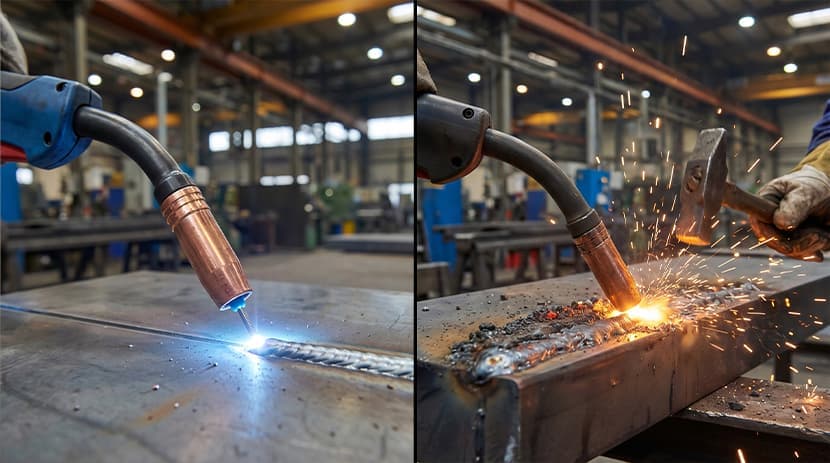
This is an absolute classic and the most popular welding method in the world. A standard copper-coated (or bare) solid metal wire is fed into the torch, and the weld pool is protected by a shielding gas (usually a mixture of Argon and CO2 — MIX).
Where it is used: Manufacturing of light and medium metal structures, fences, frames, automotive industry.
Pros: No slag (no need to chip anything away with a hammer after welding), excellent visual appearance of the weld, the process is easy to control.
Cons: Shallower penetration compared to the 136 method. Not suitable for welding very thick metal (over 20-30 mm).
Method 136: Flux-Cored Arc Welding (Drut proszkowy)
Here, instead of a solid piece of metal, a tubular wire is used, inside of which there is a special powder (flux). During melting, this powder forms an additional shielding gas and a layer of slag over the weld.
Where it is used: Shipbuilding, construction of bridges, heavy tanks, offshore rigs. Working with thick metals.
Pros: Very deep penetration, high metal deposition rate. Employers often pay 10-15% more for this method.
Cons: Slag formation! After each pass, the weld must be thoroughly cleaned. If this is not done, slag inclusions will form inside the weld (a defect that an X-ray will immediately reveal). Additionally, this method produces much more acrid smoke.
Which is easier for a beginner to master?
The unequivocal answer is: Method 135.
For a person who has never held a welding torch, solid wire is more forgiving of mistakes. You can clearly see the weld pool, there is no slag to interfere, and you can learn to lay a beautiful weld in just a few weeks of intensive practice. Method 136 requires a "steady hand," the ability to distinguish liquid metal from liquid slag, and a good understanding of torch angles.
How to start earning right now?
If you want to enter the profession but have no experience, the Zvaryuvalnyk.xyz project, with the support of the Red Cross, offers free Method 135 welding courses in Kyiv. This is your perfect start: you will receive a European certificate and a solid foundation.
And if you are already proficient in methods 135 or 136—go to the "Vacancies" section. Hourly rates up to 38 PLN netto and free accommodation await you at Polish factories!
Looking for a job?
Leave your contacts and we will find the best vacancy for you.